The Relux gets booked sometimes whole months in advance, and also gets returning guests.
the principle behind The Relux is
Sensory Convergence
It is the principle that when multiple elements in a space simultaneously communicate the same message to the nervous system — the effect is exponentially stronger than any single element could produce alone.
In The Relux nothing was working in isolation. The sage green walls and ceiling removed visual harshness. The warm lighting signalled evening and rest. The wood veneer panels gave the eye a natural, vertically stable surface to land on. The natural colours and textures confirmed what the eye was already receiving. Every sense — sight, touch, the temperature of the light — was receiving the same instruction at the same time.
Rest. You are safe. This is a natural place. You can stop now.
The nervous system didn't have to choose between competing signals. There was only one signal, rest. And when the entire room agrees — the body has no reason to resist.
RELAXED LUXURY
ISANTI SUITE
LUXURY AIRBNB
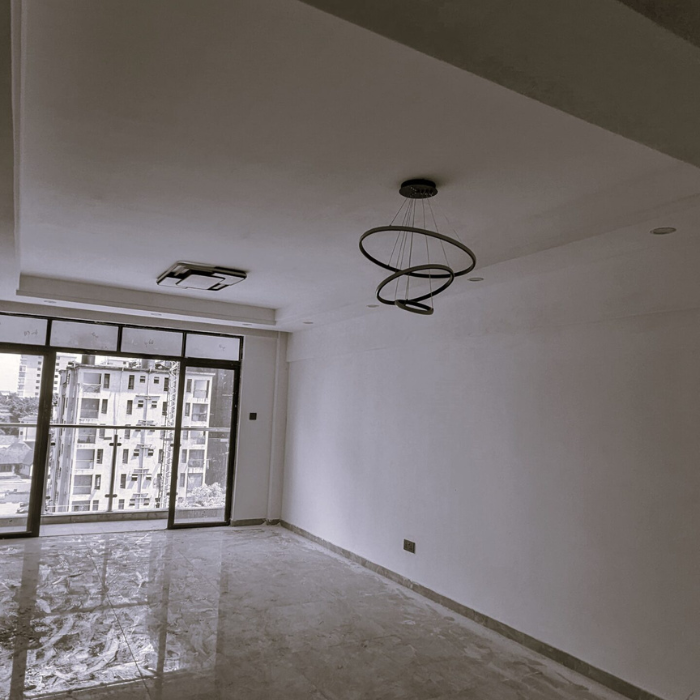
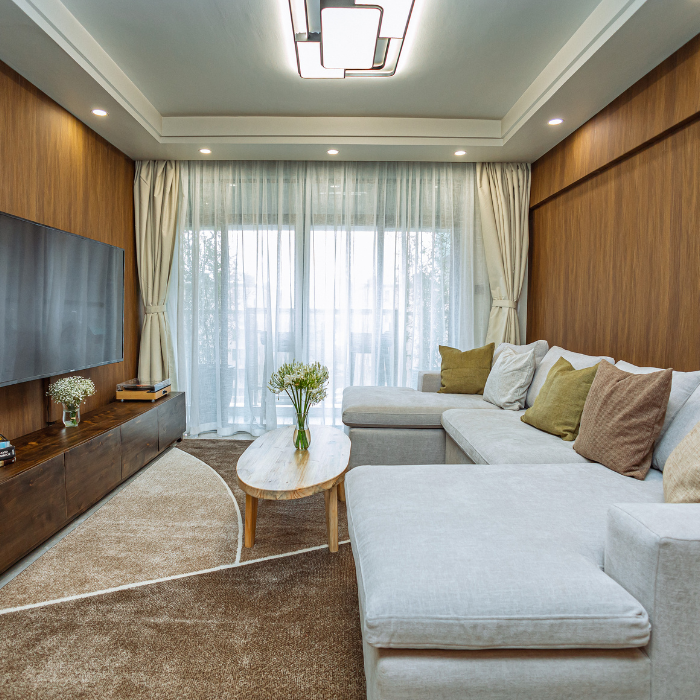
The same four walls, perceived twice the size. The space was always there. It just needed someone to see it.
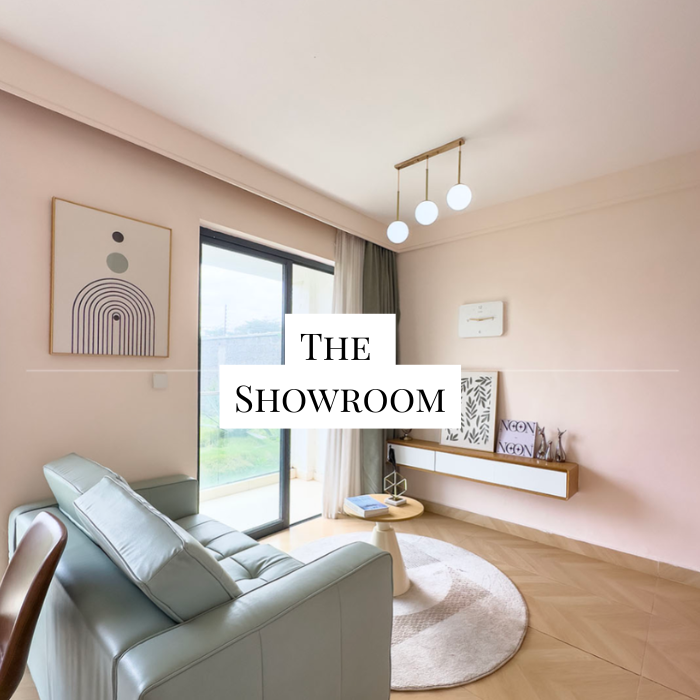
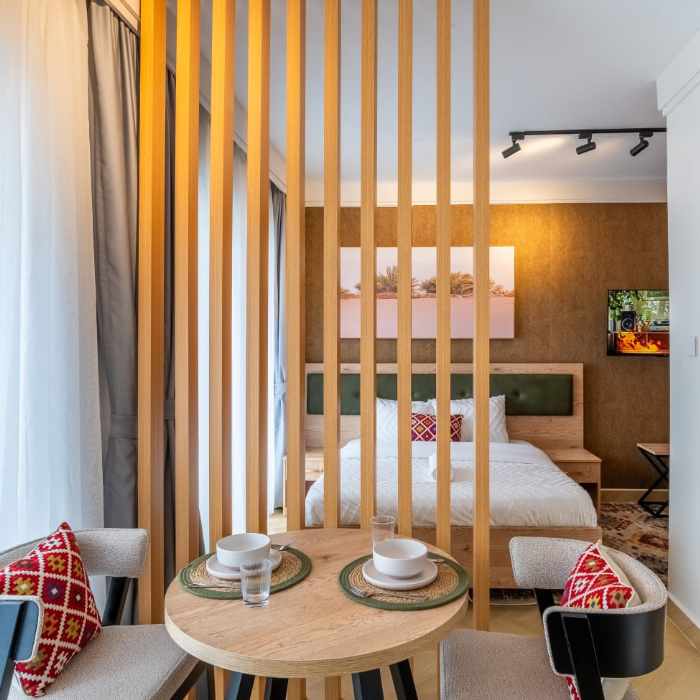
Isanti suite changed from a studio to a hotel-standard experience
the principle behind Isanti Suite is
Spatial Narrative
It is the principle that the brain does not measure a room in square metres. It measures it in how freely it can move through it, how many distinct experiences it contains and how much of the space it feels permitted to inhabit. A room with one entry point to the bed, a sofa that doesn't belong and a dining area creating visual confusion is a room with a broken narrative. The brain reads it as small and unresolved — not because of its dimensions but because it cannot find a clear sequence to follow.
In Isanti Suite nothing about the floor plan changed. But everything about how the brain read it did. The bed moved from the corner to the most generous position in the room — open on both sides, receiving light from the balcony doors. The corner that had trapped it became the room's most intimate moment — a cosy niche for watching, with the wardrobe folded into it. Three clear territories emerged where before there had been one confused space.
The brain now had a sequence to follow. A place to rest. A place to retreat. A place to work and eat, a threshold between them. It made the room feel larger not because any walls moved but because the narrative finally made sense, creating a luxury hotel experience inside a compact space.
HOTEL-INSPIRED LUXURY
T R RESIDENCE
LUXURY GUESTHOUSE
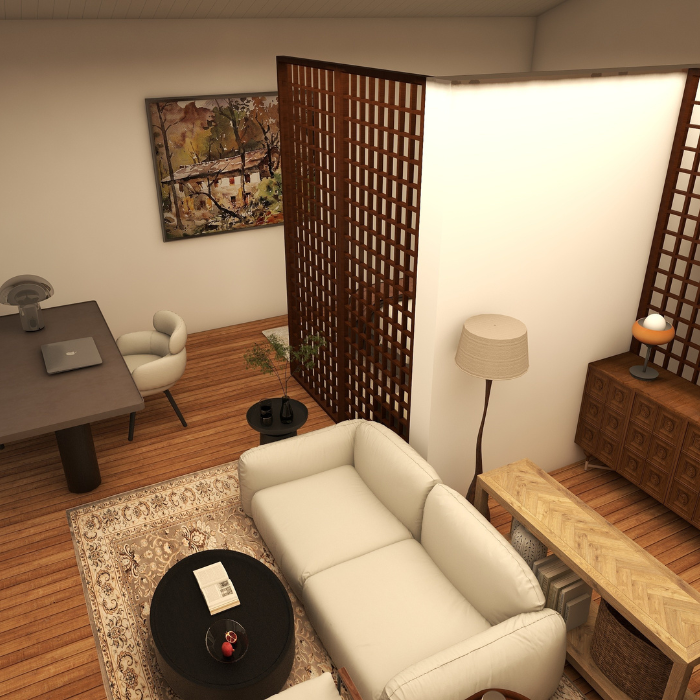
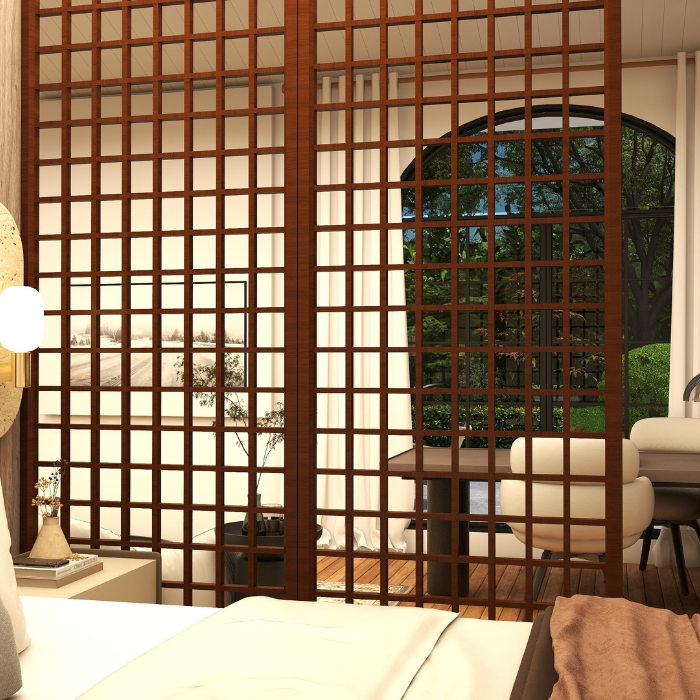
This guest house was designed with inspiration from luxury hotels and some ancient spatiality and neuroarchitecture principles. Walls dissolved, and with them the exhaustion of having a room for everything and a version of yourself for every room.
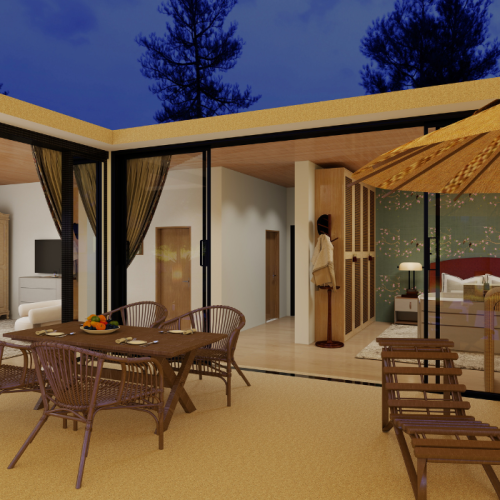
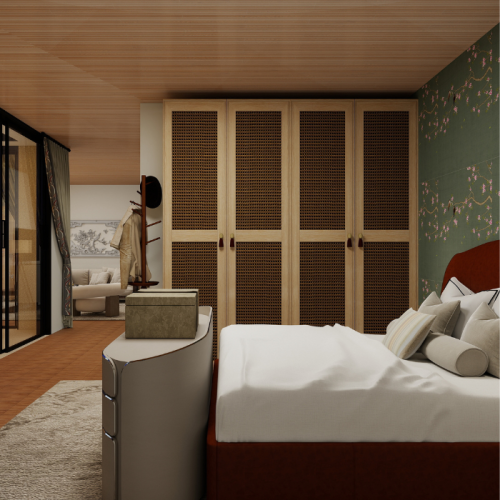
A GUEST HOUSE FOR 2 - INSPIRED BY SOME OF THE BEST ULTRA LUXURY HOTEL MINI-VILLAS
the principle behind T R Residence is
Spatial Continuity
It is the principle that the human nervous system was never designed to compartmentalise itself across a series of sealed rooms. Ancient domestic architecture understood this — the great courtyard homes of Mesopotamia, the open pavilion structures of ancient China, the flowing spatial sequences of Roman domestic life — none of them sealed one experience away from another. The walls between living, sleeping and the natural world outside were dissolved deliberately because the people who built them understood that a human being is not a collection of separate functions. They are one continuous life.
The two people inside no longer moved through a house. They inhabited one world. The exhaustion of transitioning between rooms — between versions of themselves — disappeared because the transitions did. This is why the space felt like freedom rather than a renovation. It was not a new interior. It was the removal of everything that had been quietly fragmenting the life lived inside it.
TACTILE MODERN LUXURY
E RESIDENCE
LUXURY PENTHOUSE
Guided by neuroarchitecture principles of the senses, this space is designed with an emphasis on refined luxury and rich non-competing textures—inviting deep interaction and connection for those who reside within.
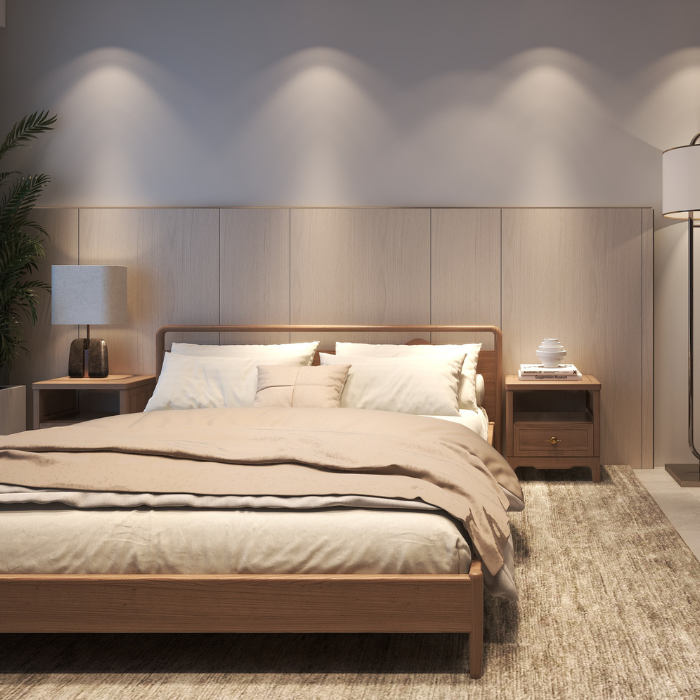
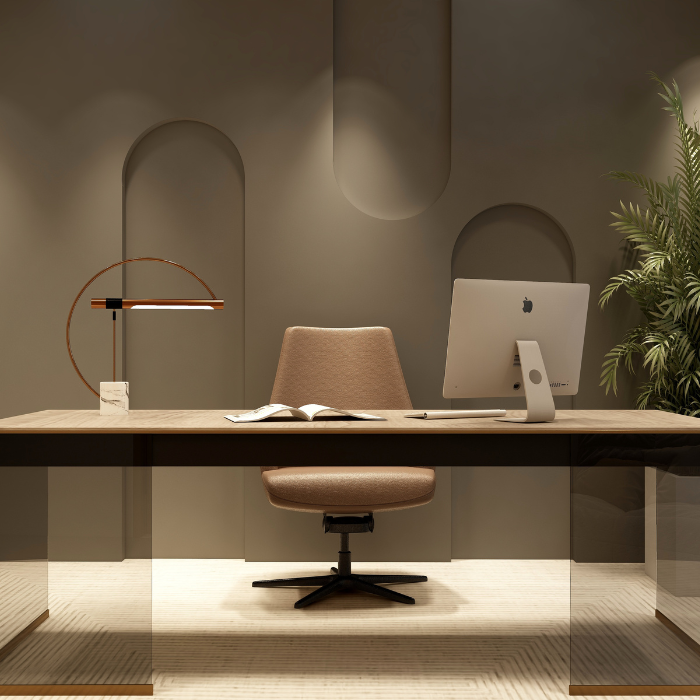
Every surface chosen for what the body would feel. Enough detail to keep the mind alive at work. Enough softness to let it go at rest.
the principle behind E Residence is
Sensory Calibration
It is the principle that the brain does not need a room to be simple in order to feel calm. It needs a room to be precisely tuned — enough stimulation to remain engaged, never enough to tip into overwhelm. Most modern interiors get this wrong in one of two directions. They either strip everything back until the space feels cold and unfinished, or they fill every surface until the nervous system cannot find a place to rest. The space between those two extremes is narrow. Finding it requires a spatial intelligence that understands not just what to put in a room but what each element is doing to the person inside it.
The modern and the ancient, the structured and the soft, the focused and the surrendered — all of it calibrated so precisely that the brain received the room as calm without being able to identify why. In the bedroom the same intelligence operated in reverse — rich enough in texture that the eye always had somewhere to land, restrained enough that nothing kept it awake.
CURATED SPATIAL EXPERIENCE
W N RESIDENCE
LUXURY GUESTHOUSE
This guest house for two focuses on cozy, modern elements and blends ancient spatiality with neuroarchitecture to create a unique layout that promotes productivity, rest, and relaxed luxury.